DIFFUSTIRON
by Extropolis AI
Streamlining AI art creation for a seamless UX and boosted conversion rates.
Role
UX Design,
Strategy,
Data Analysis
Worked With
4 Student Researchers,
2 Senior developers,
Business owner
Duration
9 weeks
July - Sept, 2023
(part time)
Brief
Diffusitron is an AI image generator app made for iOS. It includes features like prompt-enhancement, image-to-image generations, inpainting, all by using natural language text prompt. With more than 1800 daily active users using this app, Diffusitron is one of the most popular AI art generation apps on the platform, with plans to expand as a content creation and sharing platform
Problem
01
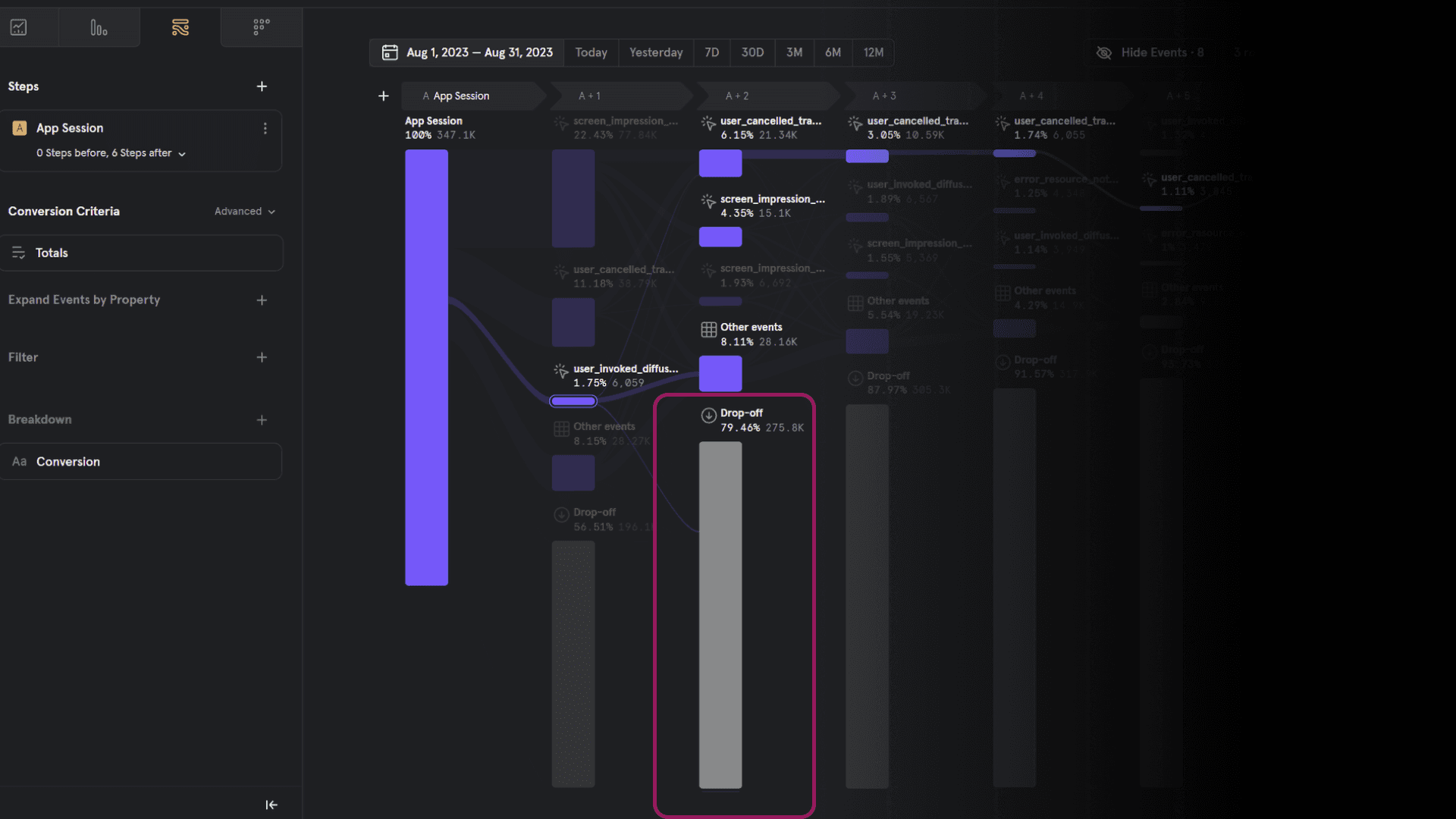
Low Conversion Rate
Despite the high volume of daily active users, very little percentage of users created an image before drop-off.
02
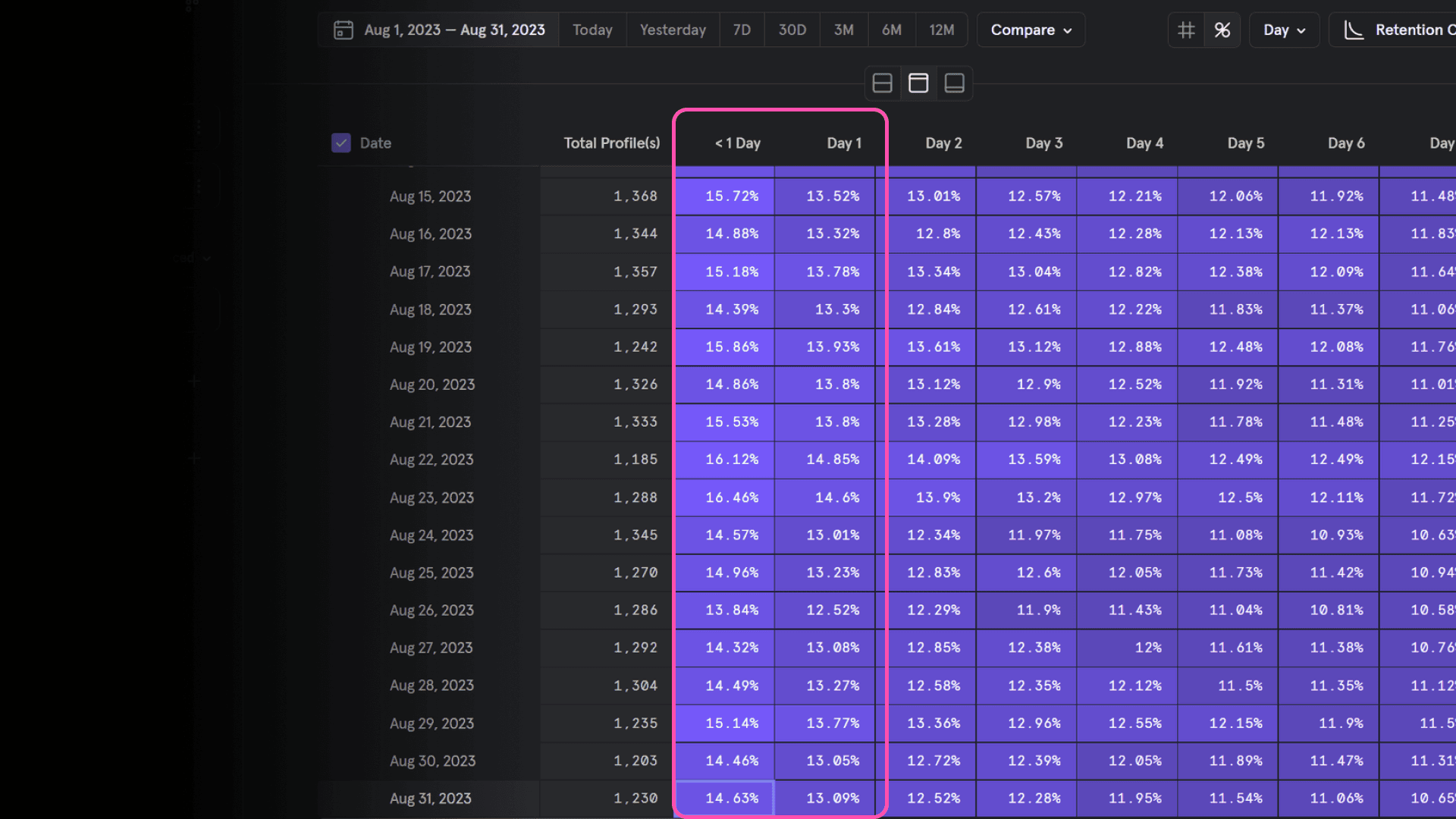
Bad Retention Rate
The app has great usage time, yet struggles to retain the majority of new users beyond their first day of use.
Goals
01
Improve app experience
Make the app easy to use for new users without disrupting the experience for the older users
02
Boost community engagement
Encourage users to stay engaged on Discord online community, share creations and feedback

Process
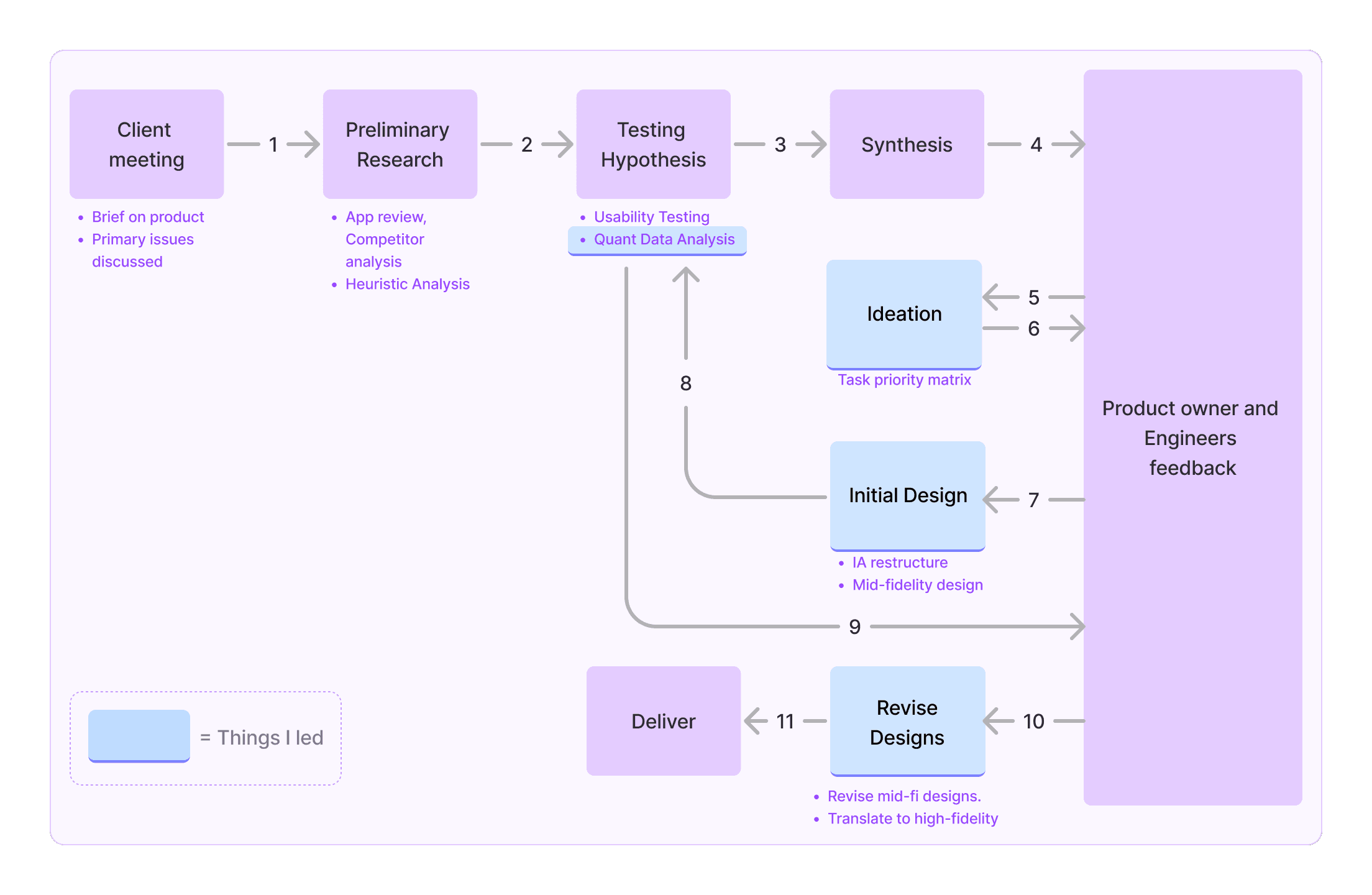
** A roller-coaster process **
Research
We initiated our investigation with preliminary research, including Heuristic Analysis, Competitor and App Review, to uncover potential reasons behind the observed issues.
To validate these hypotheses, we conducted Usability Testing (with 12 participants) and I analyzed App usage metrics through Mixpanel.
Preliminary Research
App reviews, competitor analysis
To understand user perceptions and identify areas for improvement through community feedback.
Heuristic Analysis
To evaluate the app's user experience against established usability principles and identify usability flaws.
Testing Assumptions
Usability Testing
To gain insights into the user experience from different user segments and identify navigational and functional issues.
App Usage Metrics
To assess app engagement metrics in-depth and identify issues with user retention and feature utilization.
Using the insights from the research, we condensed our findings into three user pain points and key user needs:
User pain points
01
New users are not completely aware how to create an image.
02
No sources for inspiration for creating an image.
03
Purpose of certain clickable elements is not clear.
User needs
01
Needs better onboarding experience.
02
Frequently updated main content feed.
03
Easy access to information of unfamiliar items.
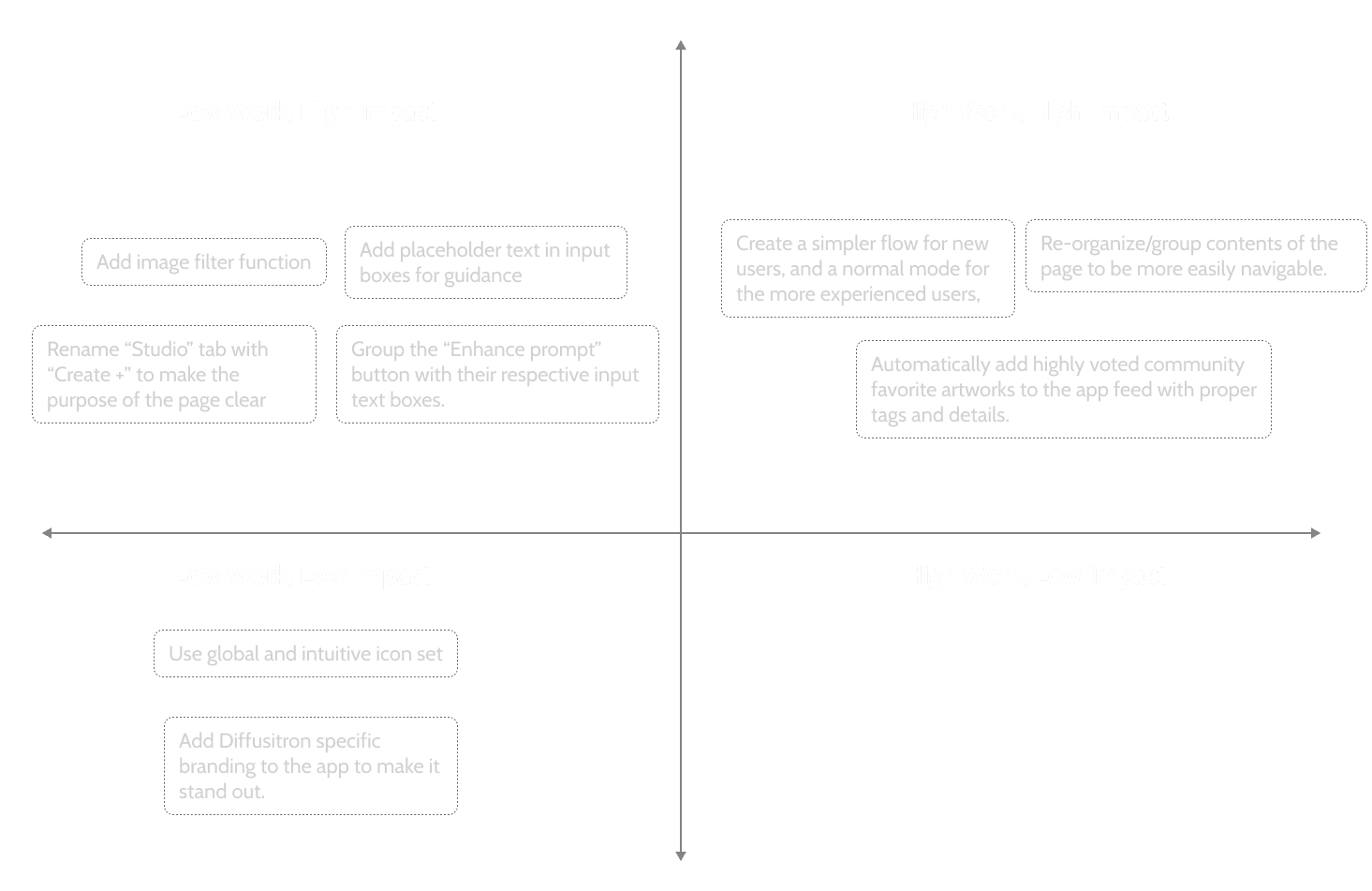
I condensed these findings into design opportunities, consulted the developer team for feasibility of implementation, and categorized them into a priority matrix based on the amount of engineering effort against its foreseeable impact.
Design Decisions
Due to limited time, we skipped ahead a few steps and iterated on mid-fidelity mockups (based on the research insights) to foster quick design revisions and cross-collaboration with the developers.
Since most of the major problems revolved around the UX of the app and not the UI, this fidelity was perfect to both quickly iterate over design ideas and to discuss/present them to the developers and stakeholders.
01
Improving new user's experience
while retaining the old users

Final choice
Beginner friendly.
Teaches user to use the features while also showing what is possible.
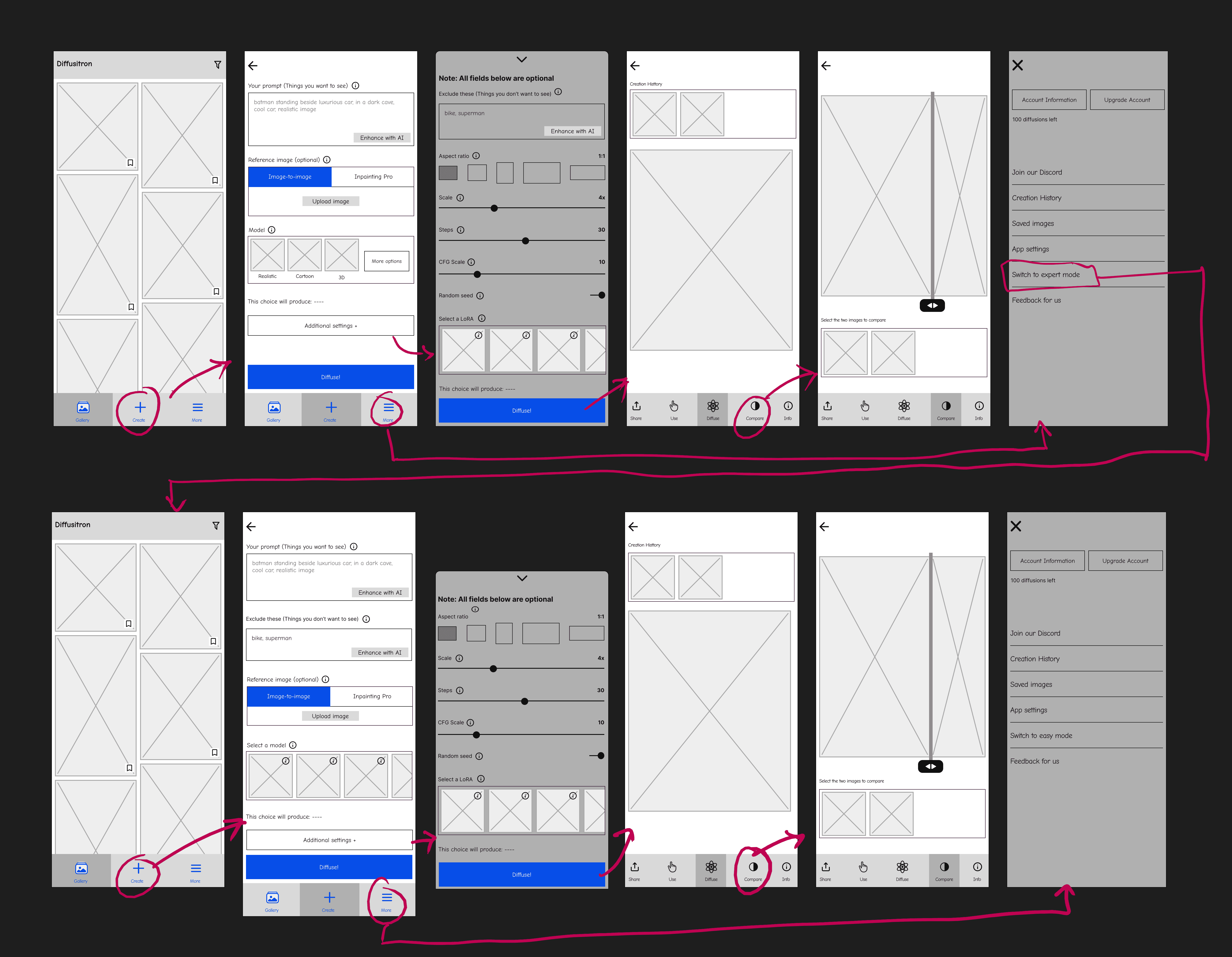
Past choice
Two different User Experiences for experienced as well as new users.
Reasons for scratching the idea:
New user is abstracted from many features which may overwhelm them if the mode is changed
Divide in community while sharing their experiences with the app .
02
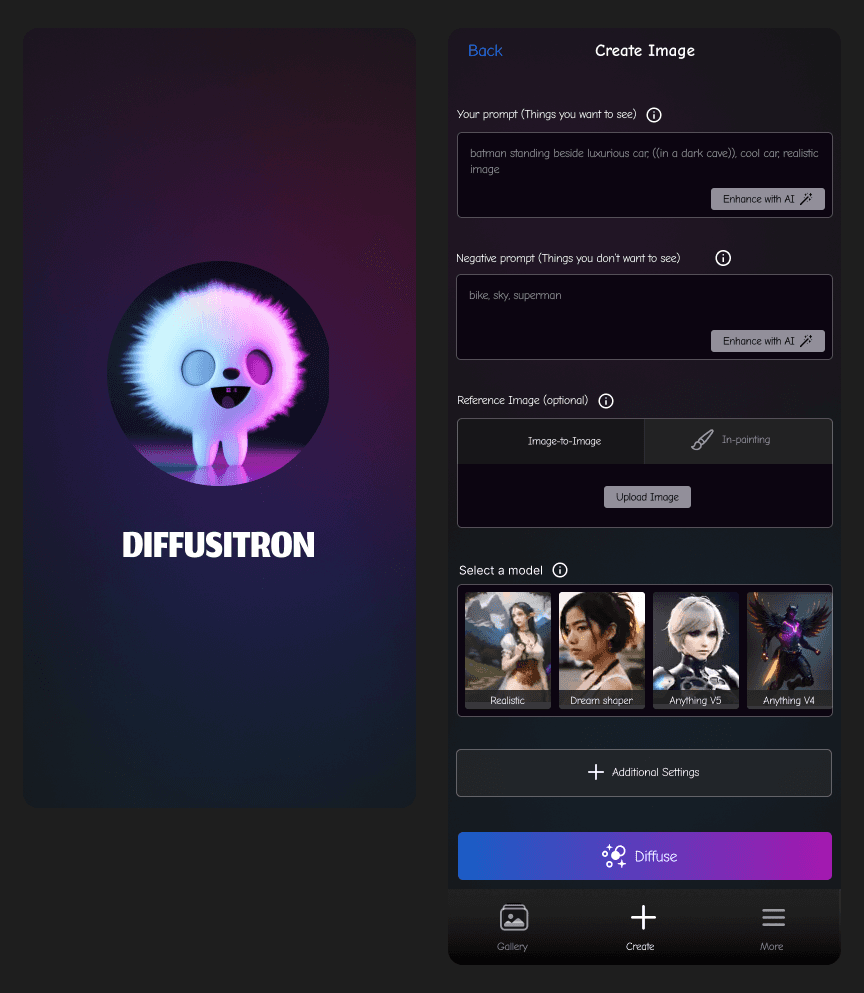
Boosting brand distinction
to stand out in an already saturated AI Art creation space
Choices made
New user is abstracted from many features which may overwhelm them if the mode is changed
Divide in community while sharing their experiences with the app .
Community engagement and support for top voted models.
Art sharing with the community to boost engagement and retention through their online presence.
03
Improving usability
through small but impactful changes overall
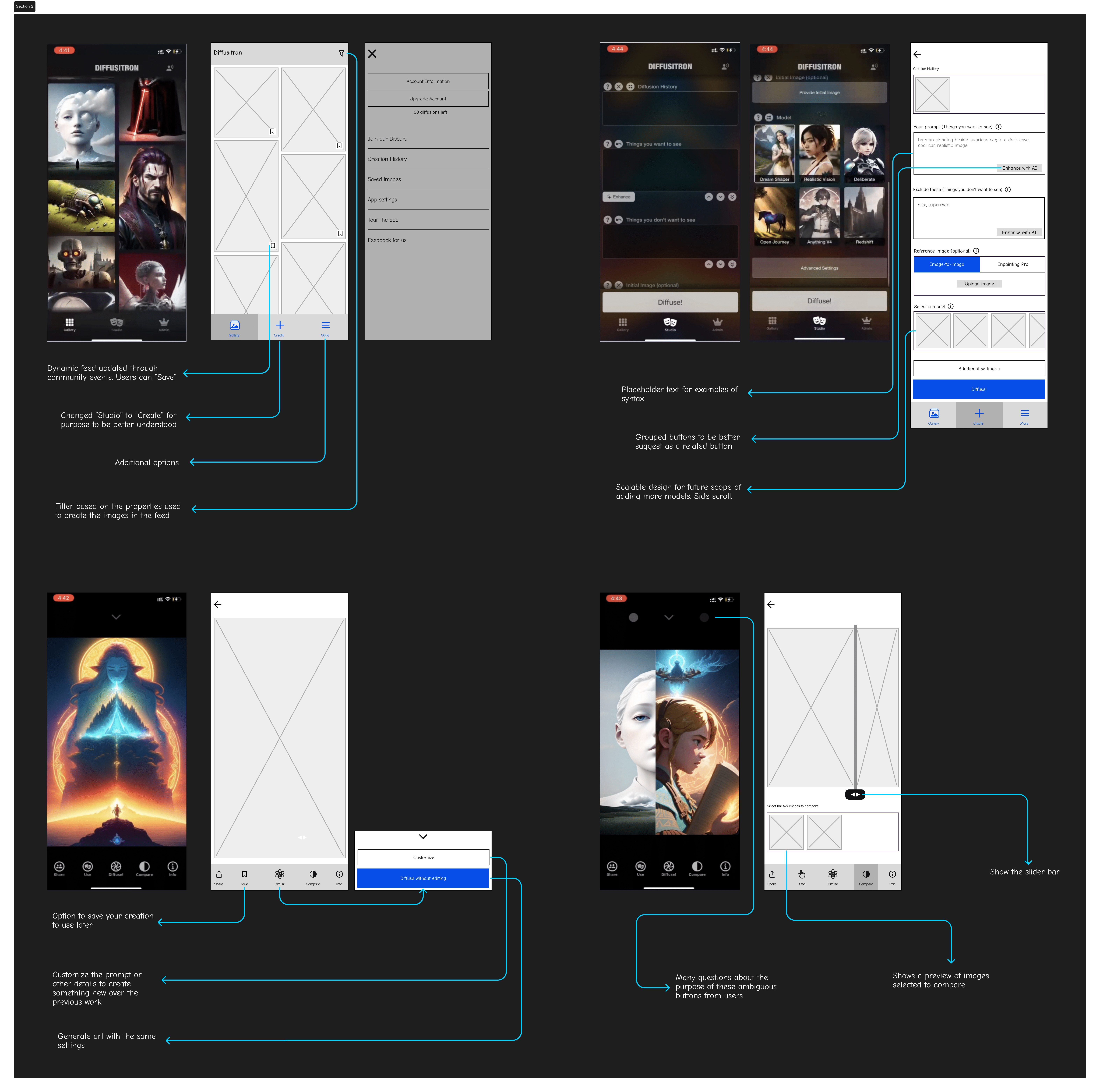
Choices made
Content changed to be universally understood.
Save option for user to store their favorite picks
Scalable design elements.
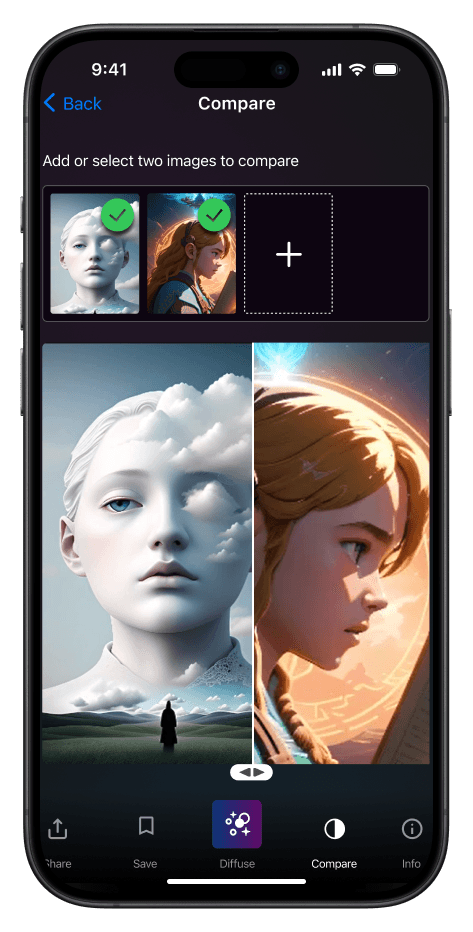
Compare feature design rehaul to be more intuitive
Final Solution
01
Better Information Architecture
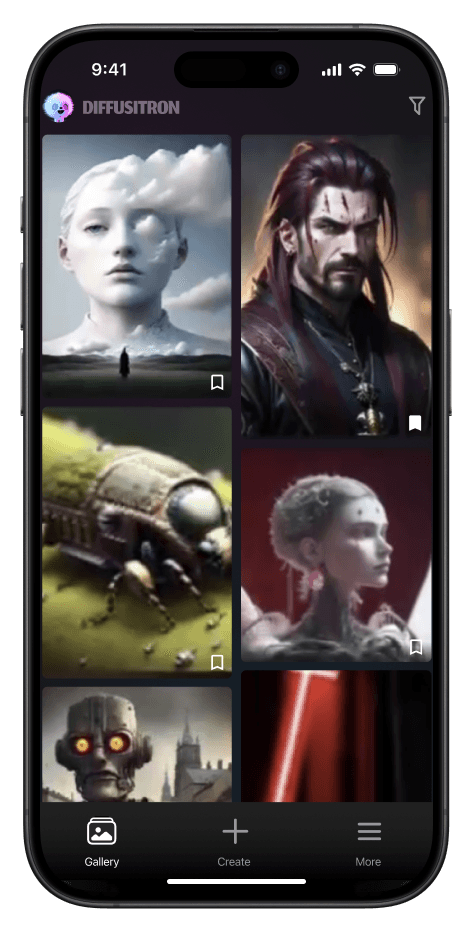
Added filter button on homepage to help users find relevant examples and inspiration.
Re-organized content, features and terminology to be more universally understood.
Grouped all miscellaneous options into "More" toggle.

02
Tutorial for new users
A solid guide allows users to learn the ropes and not quit frustrated about not getting what they wanted out of the machine.
03
Improved flows for main CTA and scalable design
App continuously pushes new updates and features. The design is changed to address cluttered UI to welcome more features to be added in the future.
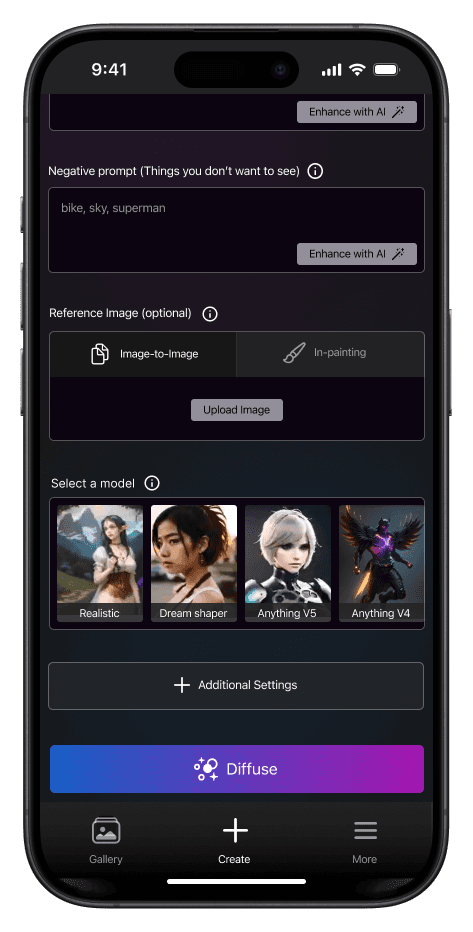
Visually distinct main CTA
More intuitive UI for comparing images


Outcome
Within a few weeks after deploying the initial changes, the app saw considerable boost (almost 7x) in all facets for almost the same active user numbers
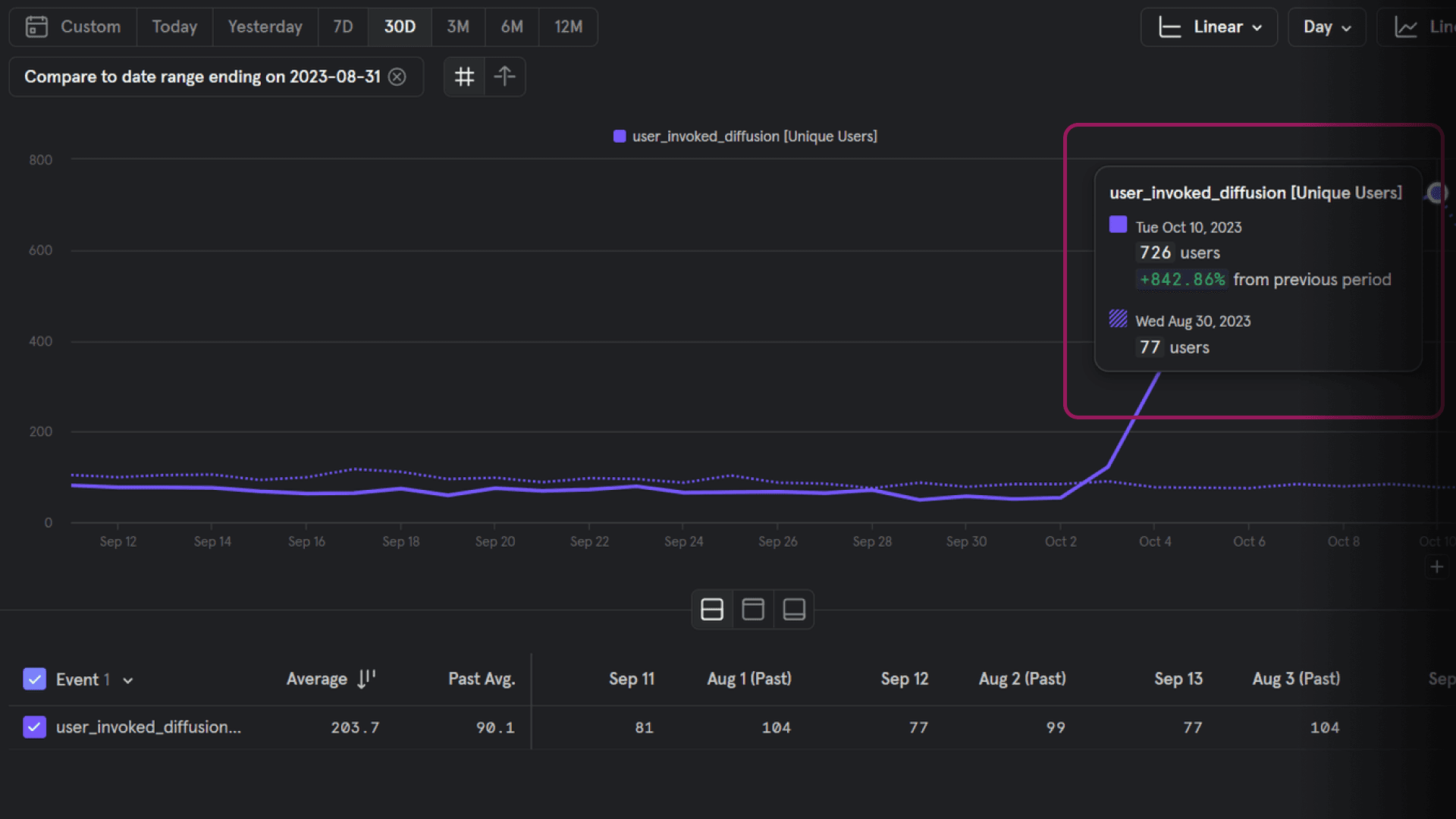
9x increase in conversion rate
Up from about 80 users per day to about 700 users per day within 2 months
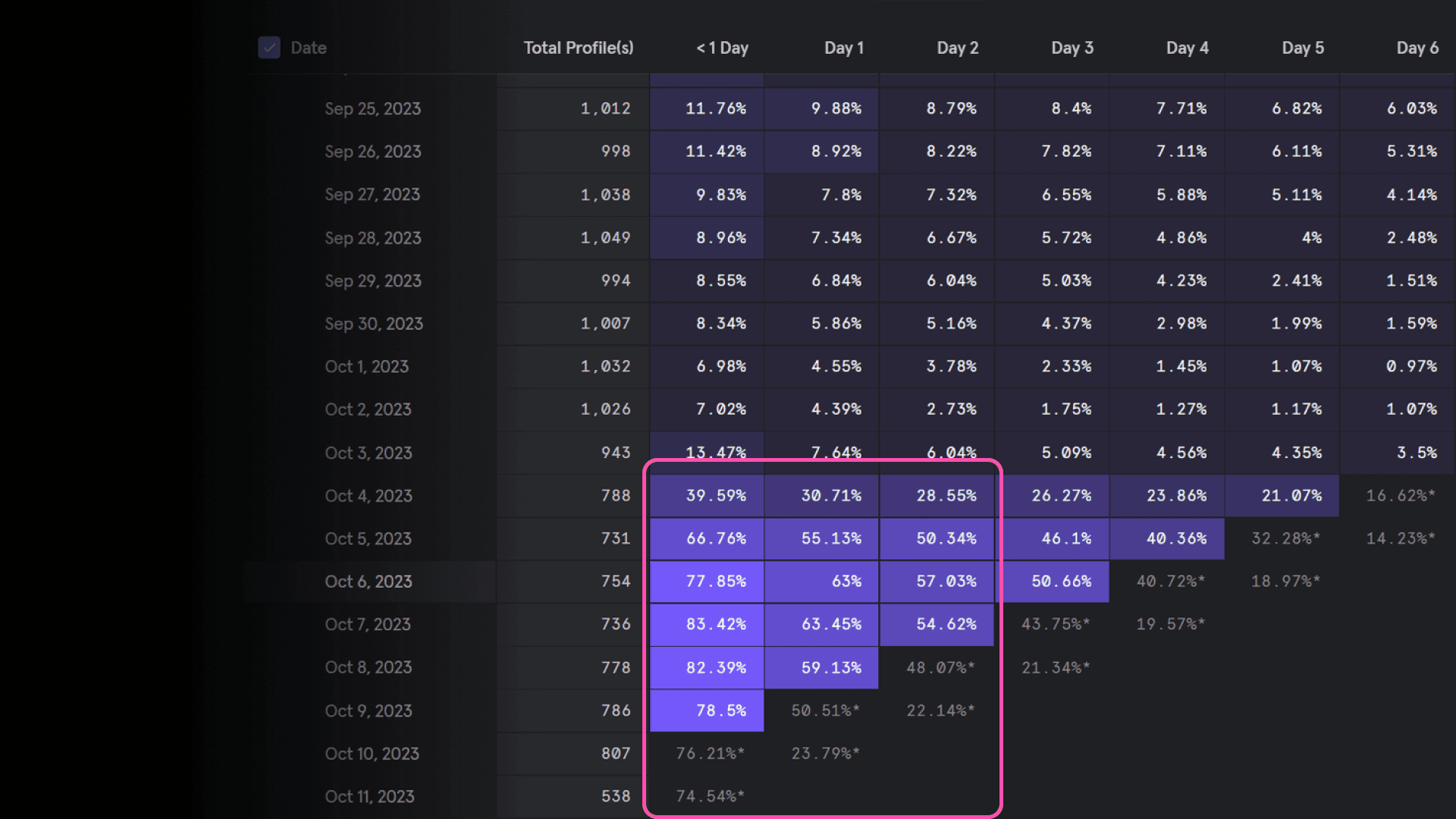
4x increase in retention
New user retention increased from about 15% to about 75% for a given week.
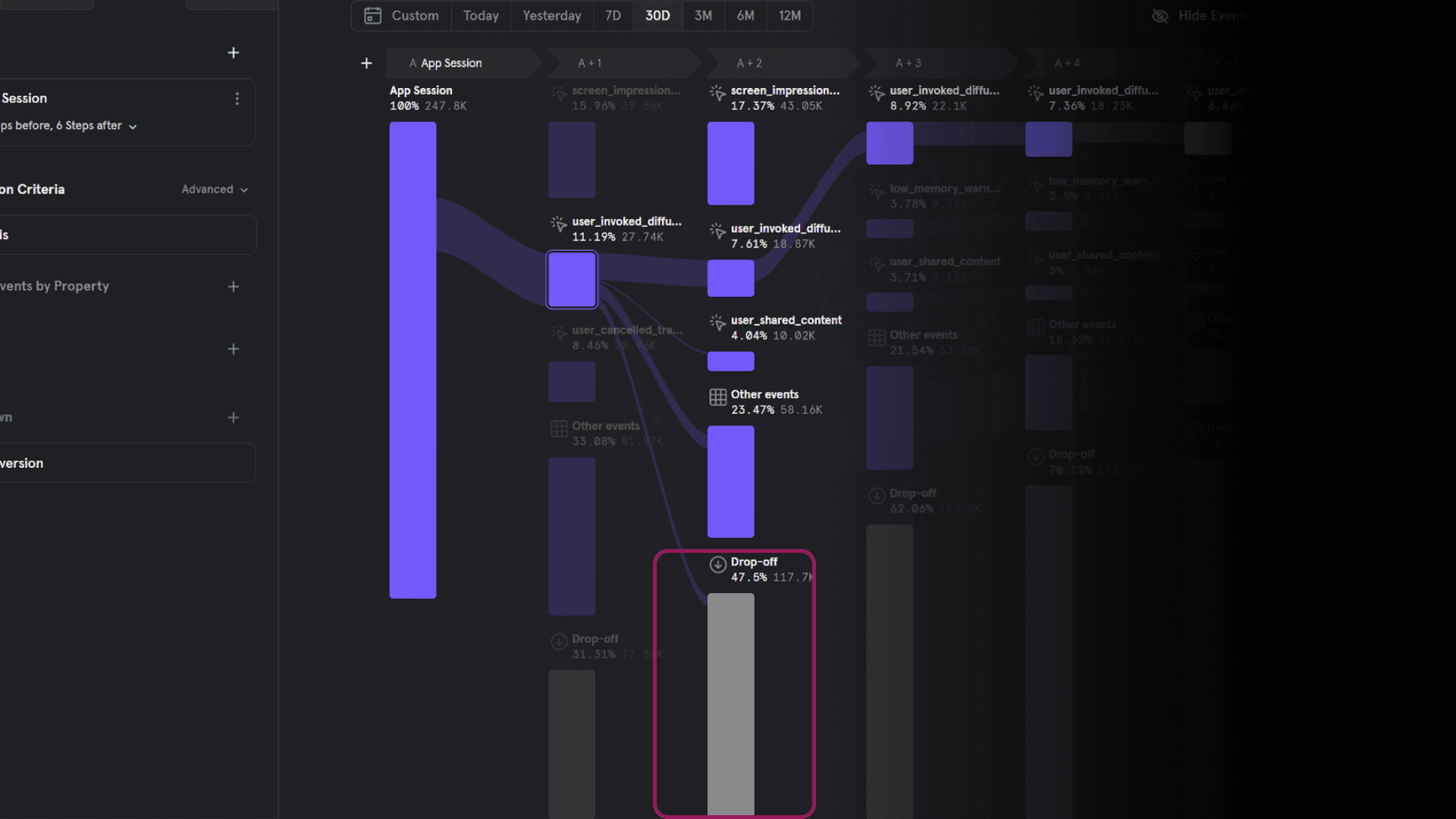
Reduced quick drop-off rates
Number of users who dropped off without exploring other pages and creating an image has considerably reduced.
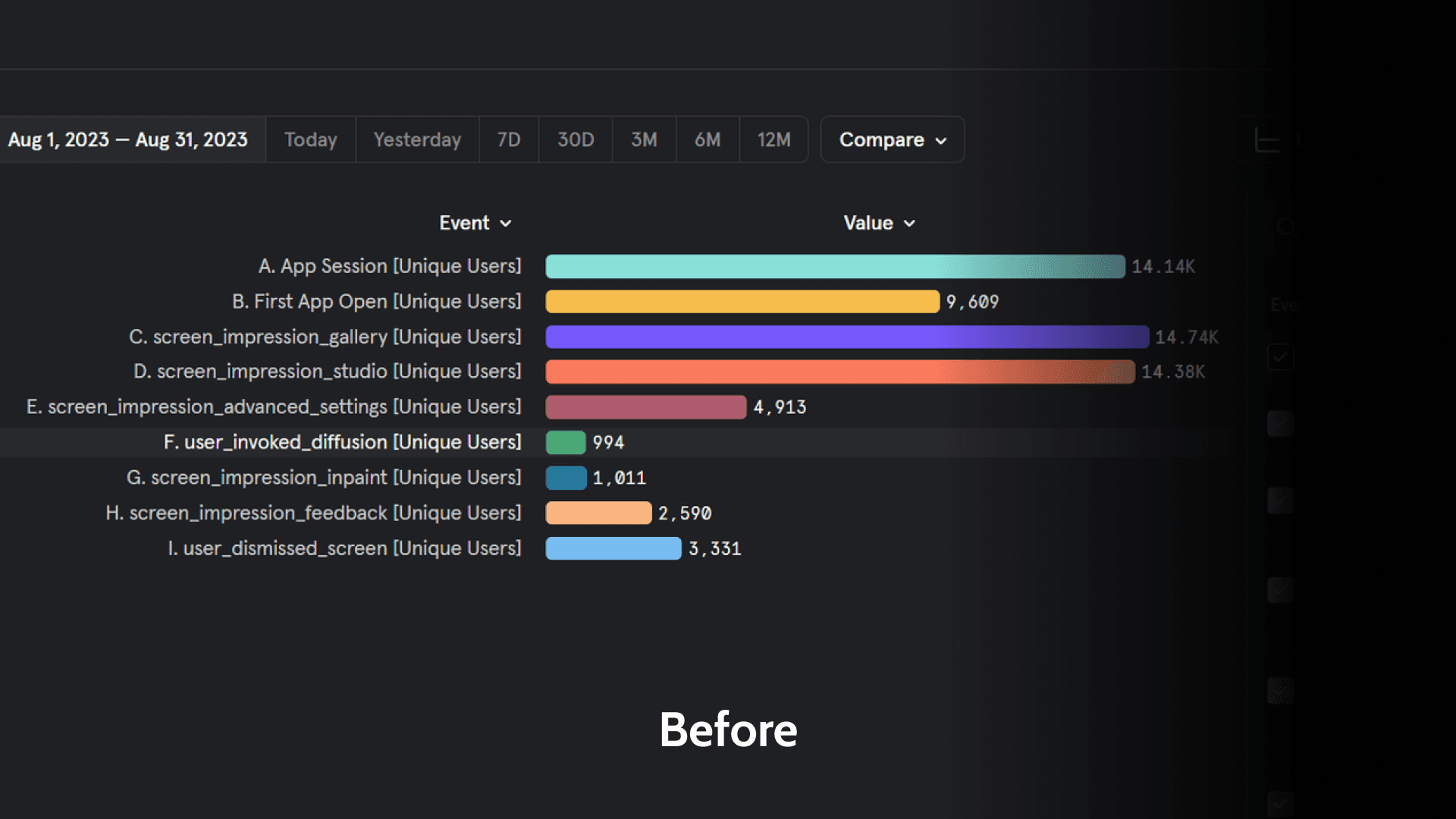
Better app engagement
Users engagement in other pages in the app also increased
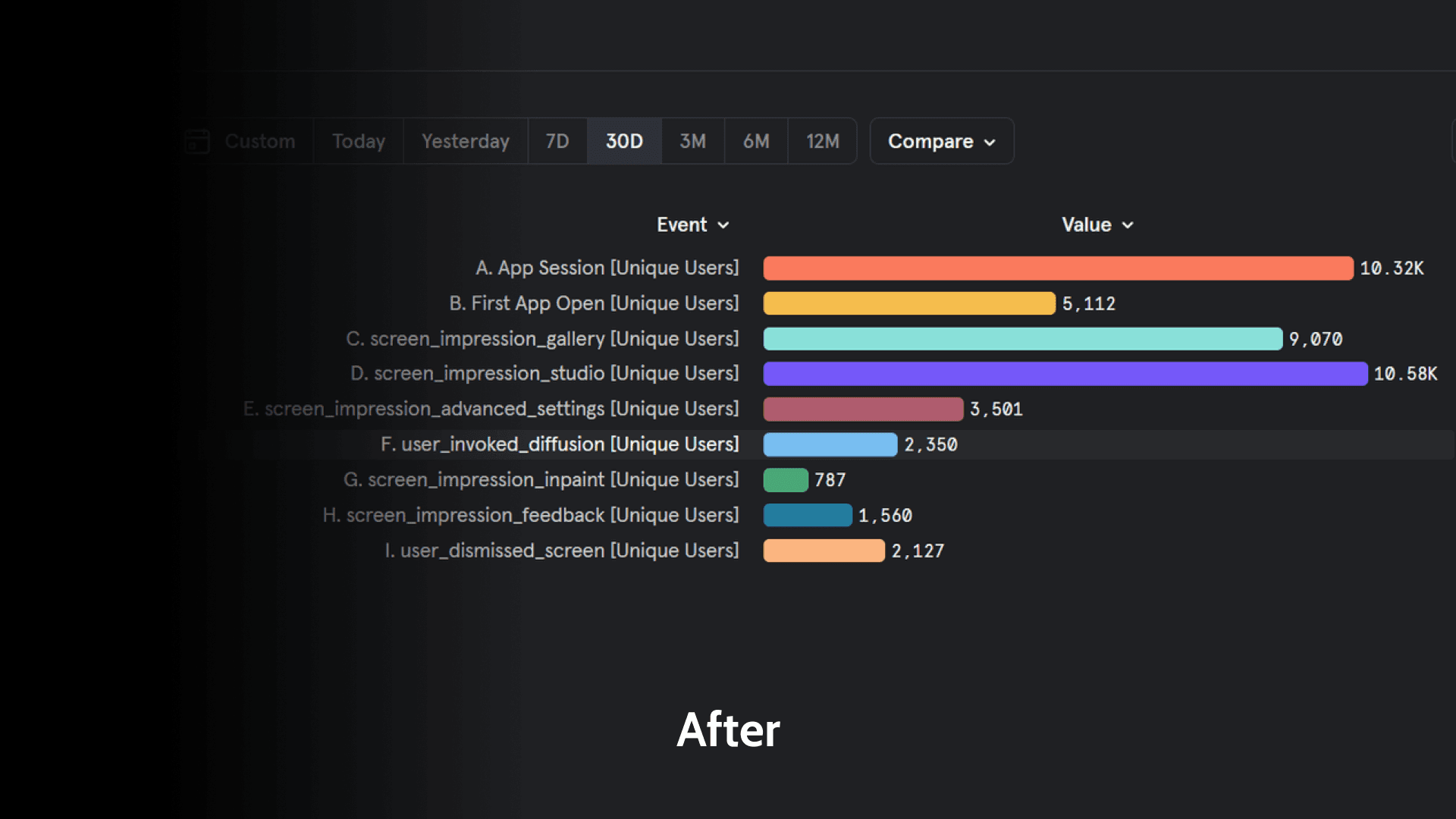
With many more updates and improvements to come, the app (as of Oct, 2023) is doing much better.
Changes incorporated (some are temporary before more permanent changes can be added):
Dynamic content for main page
Filter option on home page to look for inspiration
Tooltips to help users understand the feature
Scalable design for the displaying multiple new AI models
Backend changes to make the app more responsive
If we had more time...
Create a design system for multi-platform consistency.
Research and improve experience of paid features (like in-painting).
Ideating for the future goals of the service (AI generated asset marketplace).
Learnings
Research and prioritization of efforts goes a long way in informing the work required for later stages.
Communication and collaboration with the developers and stakeholders is key. Design ideas can be communicated in many other ways, not just high-fidelity designs.